



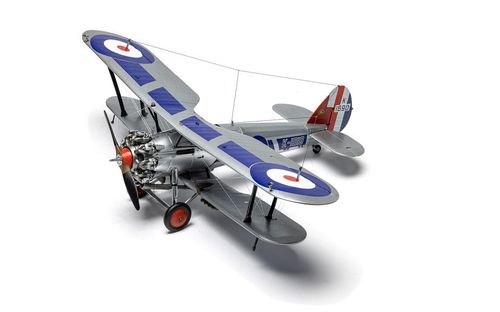
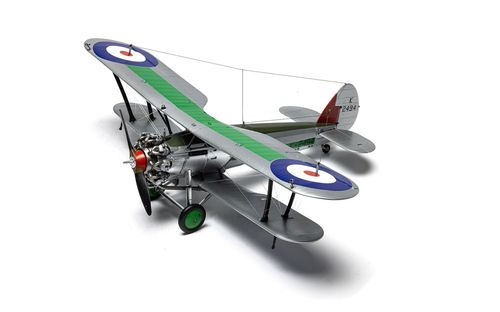

Information
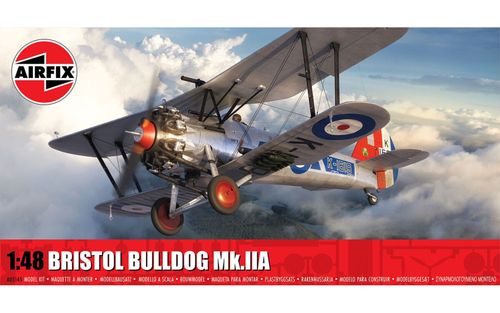
Bristol Bulldog Mk.IIA New Parts Feature:
- Wide-track undercarriage with metal wheels and tailwheel
- Later type tail fin and rudder
- Optional exhausts with cabin heater and spent cartridge collection bins
- New cylinder heads to represent the type fitted to the Bristol Jupiter VIIF engine of the Bulldog Mk.IIa
- New parts for external oil cooler
Also Features:
- Subtly rendered fabric skin effect
- Multi part cockpit includes fuselage framework, ammo bins and machine gun breeches
- Designed based on exclusive access to 1000+ original Bristol drawings
- Details include camera gun, wing mounted generators, bomb rack and landing flare
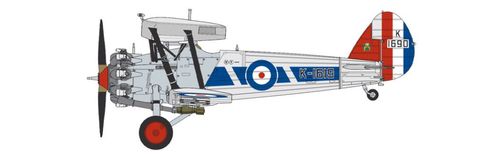
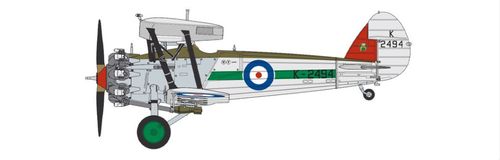
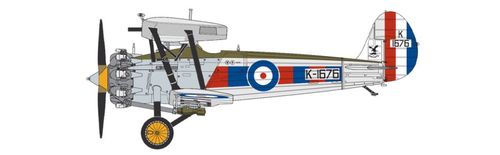
The Bristol Bulldog is a British mixed biplane fighter. The prototype flight took place on May 17, 1927, and the first planes were delivered to RAF squadrons in 1929. By 1932, they were equipped with 10 squadrons. They were withdrawn from service in 1937, giving way to Gloster machines: Gauntlet and Gladiator. Two main versions of the aircraft were created: Buldog II powered by the Bristol Jupiter VII engine with a capacity of 440 HP and Buldog IIA powered by a Jupiter VIIF engine with a capacity of 480 HP. In total, fighters of both versions were delivered to the RAF 360. The Bristol Bulldog was the first British aircraft to be serially equipped with a radio and oxygen system for the pilot. The machines were exported to Latvia, Estonia, Sweden, Denmark, Siam and Australia. Technical data: Maximum speed: 287 km / h, maximum ceiling 8,930 m, armament: fixed - 2 Vickers K machine guns cal. 7.7 mm
Manufacturer
Airfix
